
.png)
When your bike sputters to a stop in the middle of nowhere, one kind of rider grins and thinks, “Game on,” and the other feels their stomach drop.
You’re miles from pavement, no cell signal, and the silence hits harder than the breakdown itself.
Out here, there’s no Uber, no buddy with a truck, and no quick tow out of trouble.
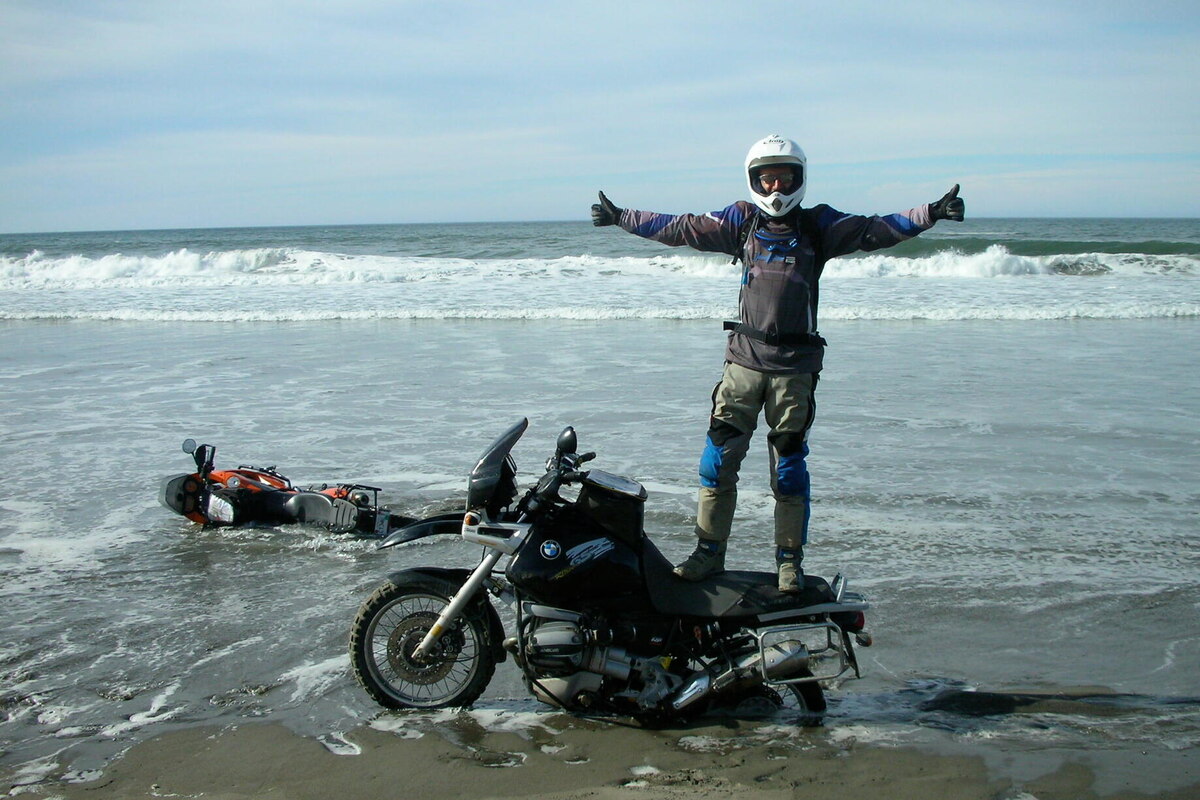 “A hightlight moment from Eric's trip down to Ushuaia. The journey that helped define RIDE Adventures’ mission to get riders exploring the world.”
ADV riders live for the remote stuff, that’s the whole point right, but that same remoteness is exactly what turns a simple mechanical issue into a real problem.
This guide is all about stacking the odds in your favor so a breakdown becomes a story, not a disaster.
Step 1: Stop, Breathe, and Stay Calm
Your first instinct might be to panic or to be frustrated, but both waste energy. Before diving into tools, take a minute to steady yourself.
Check your surroundings, hydrate, and mentally switch from “ride mode” to “problem-solving mode.”
Panic leads to sloppy decisions, like stripping bolts or wandering off-trail without a plan.
Calm riders make better calls and get home faster.
Step 2: Assess the Situation Safely
Before wrenching, make sure you’re not in immediate danger.
Is your bike stopped in the middle of a blind trail or near water? Move it to a stable, visible spot.
Prop it securely so it won’t tip while you’re working. Once you’re safe, take stock: what exactly happened, and what resources do you have?
This quick pause sets the tone for the whole recovery.
Step 3: Check the Obvious First
It sounds basic, but you’d be shocked how often the problem is something simple.
Fuel range miscalculated, a kill switch bumped, a loose battery cable—these are common culprits. Run through the basics:
|
Many “catastrophic” breakdowns get solved in five minutes by checking these before you tear the bike apart.
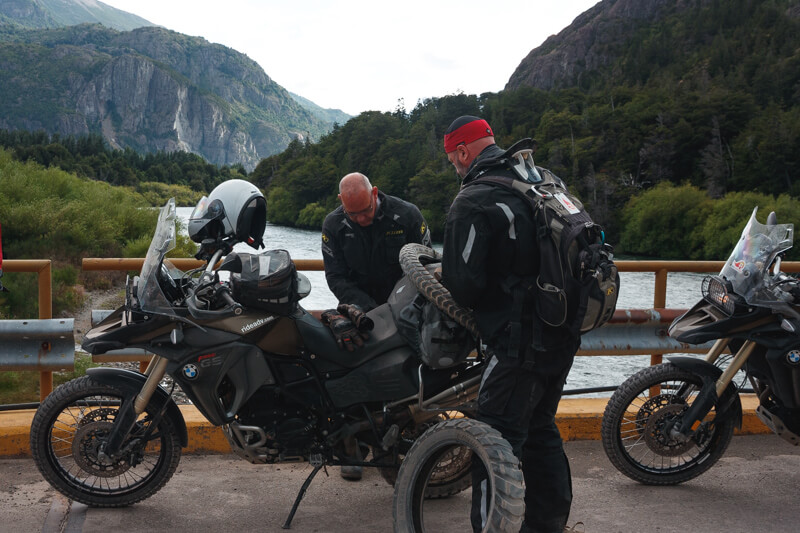 “Riding to Ushuaia means you won’t always find the parts you need. Here’s Eric helping customers strap spare tires to their bikes before crossing into Argentina.”
Step 4: Attempt the Quick Fixes
This is where your trail kit earns its keep.
A compact roll with wrenches, zip ties, duct tape, JBweld and a few key spares (master link, spark plug, tube/patch kit, fuses) solves the majority of backcountry problems.
Examples:
|
We’ve seen riders limp 50+ miles out of the bush with nothing more than a bodged repair and determination.
The hack is to carry the right tools, not a full workshop.
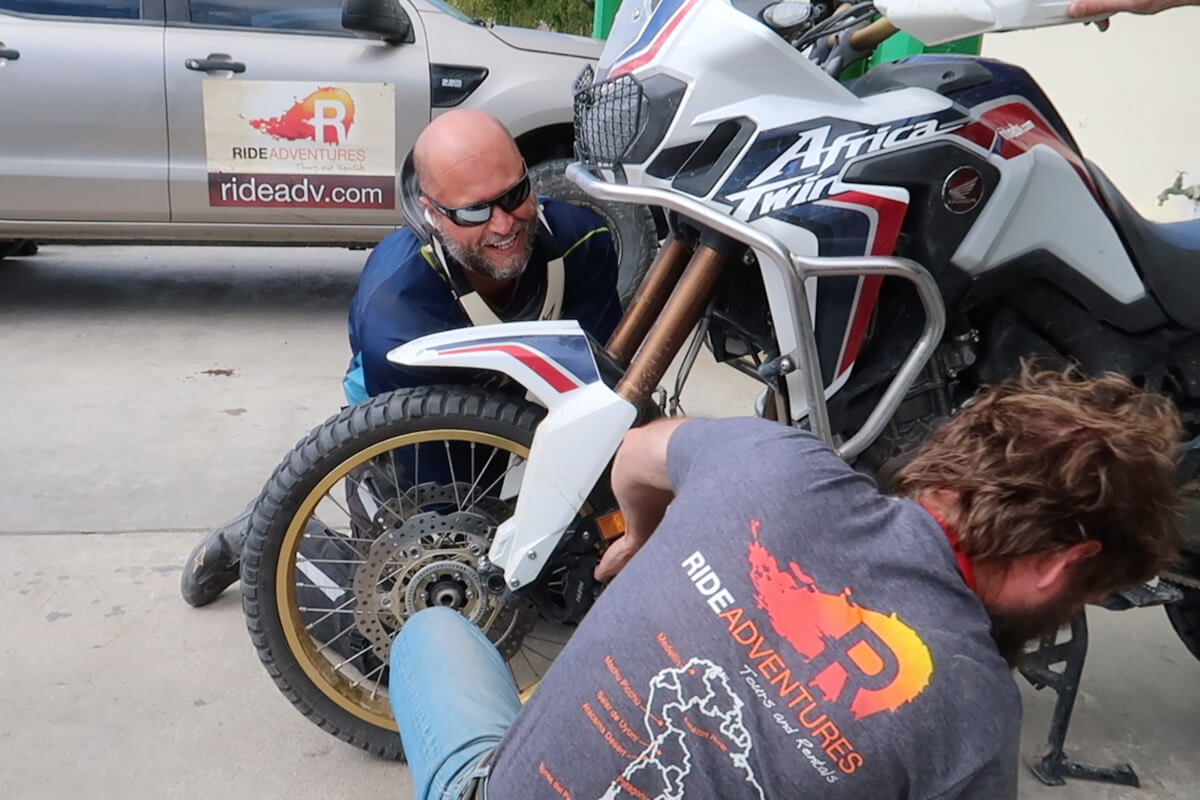
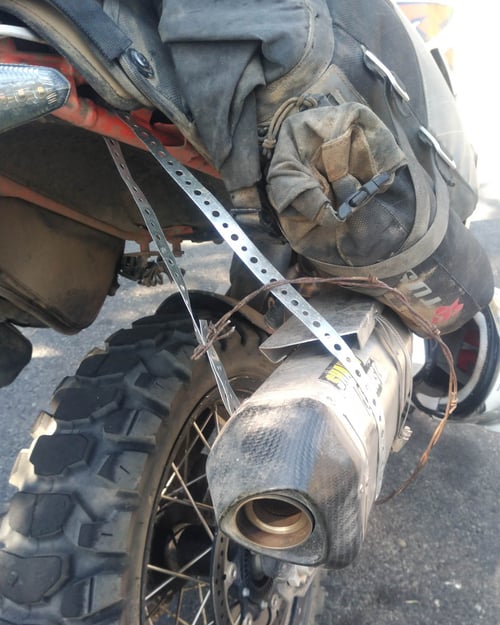 "RIDE instructors Mack and Jeff on thier own BDR adventure making a trailside repair"
Step 5: Know When to Stop Wrenching
Not every breakdown can be fixed trailside. If you’re burning daylight, exhausting yourself, or making things worse, call it.
Focus on stabilizing the bike and conserving your energy.
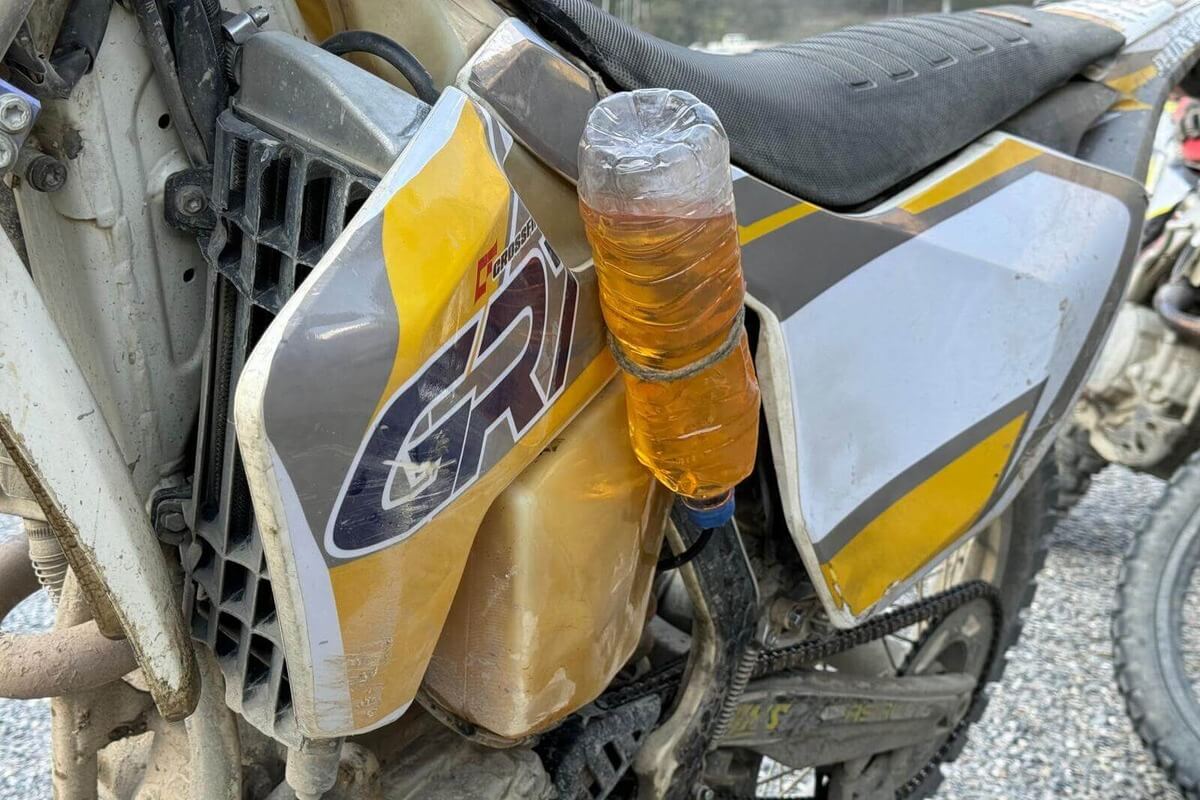 "Team RIDEr Garrett and research crew in Nepal had to improvise with a back up water bottle gas tank just to make it to the next town for repairs"
Spending three hours trying to fix a fuel pump you can’t actually replace just means you’re stranded in the dark.
Sometimes survival means knowing when to quit.

Step 6: Communicate and Signal
If the bike won’t move, your priority shifts to getting help. If you’ve got service, call for pickup.
If not, this is where satellite messengers (like Garmin inReach or SPOT) are lifesavers.

A simple SOS beacon can cut rescue time from days to hours.
If you’re truly off-grid without comms, use old-school tricks: bright gear laid out in the open, mirrors, whistles, or a smoky fire if necessary. Visibility saves lives.
RELATED: The Best Off-Road GPS Options For Motorcyclists and Overlanders
Step 7: Take Care of Yourself While You Wait
Mechanical issues are one thing—hypothermia, dehydration, or injury are another. Break out your “survival kit”: water, snacks, first-aid, and weather protection.
A compact water filter or purifier can literally be the difference between waiting comfortably and panicking.
Conserve energy: don’t wander unless you know where you’re going and can get back.

Step 8: Recovery Plan Basics
The smartest move happens before you ever hit the trail.
Always:
|
On group rides (including our tours), recovery is built into the plan: comms, support, and extra tools. Solo riders need to adopt the same mindset.
You don’t prep for breakdowns because you expect them—you prep to survive your ride when s%@! hits the fan.
Wrap-up
A breakdown in the backcountry isn’t the end of your trip unless you make it one.
With calm thinking, basic troubleshooting, and some smart prep, you can turn a disaster into just another story.
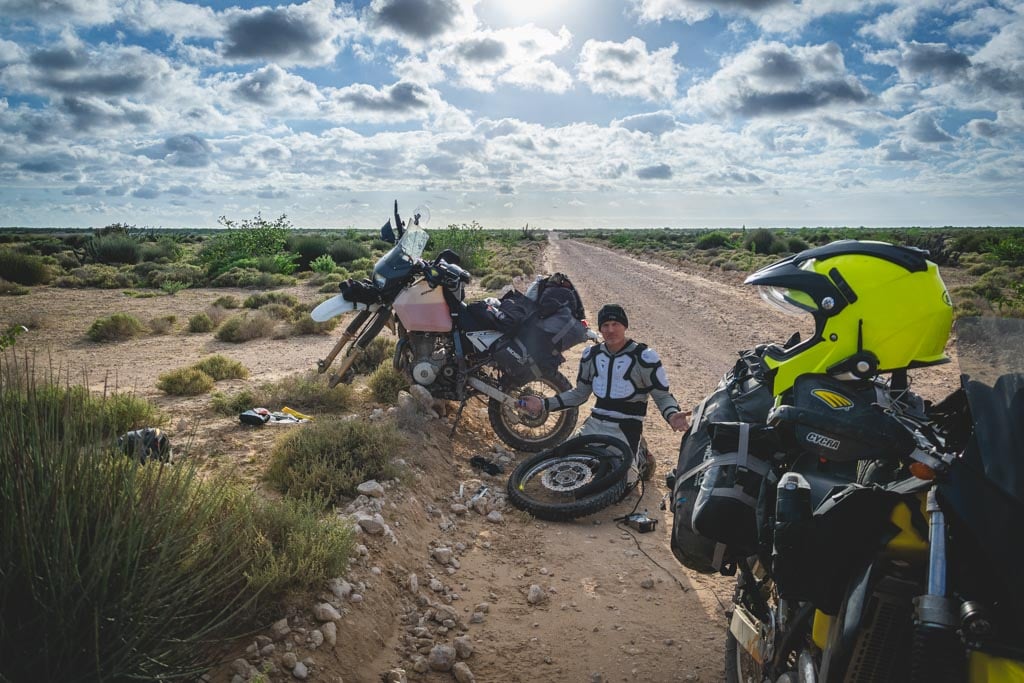
Adventure riding is about the unexpected—that’s why it’s addictive.
The trick is making sure the surprises don’t end your ride before you’re ready.
READ MORE:
9 Best Dual Sport Motorcycles in 2025
Backcountry Training Expedition - Coach and Camp
How to Plan a BDR Trip Without Overplanning It