The riding is the fun part. Getting there is where people trip up.
A wrong letter on your visa, a missed online form, a rental bike that can't be dropped off where you finish, or a flight home out of the wrong city can turn your first day in Vietnam into a headache. None of it is hard. You just need to know what to sort out, and when.
This guide walks you through planning a motorcycle trip to Vietnam, whether you're renting a bike and riding on your own or joining a guided trip like our Northern Vietnam dual sport tour or North to South All-Pavement tour.
We'll cover how to ride, how long you need, visas, flights, money, phones, where you'll sleep, what you'll eat, and the first-timer mistakes to skip.
Step 1: Decide How You'll Ride
Everything else in your plan follows from this.
- Rent a bike and ride on your own. The most freedom and the lowest cost, but you handle the route, the bike, the paperwork, the language, and anything that goes wrong. Most riders rent in Hanoi, Da Nang, or Saigon.
- Buy a bike. Some long-term travelers buy a cheap bike and sell it at the end. It can work for a trip of a month or more, but the paperwork and the reselling are on you.
- Join a guided tour. The route, bikes, hotels, most meals, a support truck, and a bilingual local guide are handled. You show up and ride.
Our complete guide to riding Vietnam breaks down the pros and cons of each.
How Many Days Do You Need?
- The Ha Giang Loop on its own: 3 to 5 days of riding, plus travel time from Hanoi.
- A loop through the northern mountains: 10 to 14 days to see the big highlights without rushing.
- Hanoi to Saigon on your own: plan on 2 to 4 weeks. The country is long, and the good roads aren't the direct ones.
- Our guided routes: 14 days each, including an arrival day and rest days.
Whatever you pick, add a buffer day or two. Weather, a flat tire, or a place you don't want to leave will eat into your schedule.
Pick Your Route, Then Your Airports
Your route decides where you fly in and out.
- Northern loops start and end in Hanoi, so a round-trip ticket works.
- North to south (or south to north) means flying into one city and out of the other. On your own, you'll also need a one-way rental (more on that below).
- Central and southern loops often start from Da Nang or Saigon.
Our routes:
- Northern Vietnam Dual Sport: starts and ends in Hanoi.
- North to South Dual Sport and North to South All-Pavement: start in Hanoi, end in Saigon (Ho Chi Minh City).

Passport, License, and Insurance
Check Your Passport
Your passport needs at least six months left from your arrival date and a couple of blank pages. Check it now, not the week before you fly.
Sort Your License
To ride legally, you need your home motorcycle license plus an International Driving Permit (IDP) with the motorcycle class. In the US, you can get one through the American Automobile Association (AAA) or the American Automobile Touring Alliance (AATA).
There's a catch for Americans and Australians: Vietnam officially recognizes the Vienna Convention on Road Traffic 1968 version of the IDP, and the US and Australia only issue the Geneva Convention on Road Traffic 1949 version.
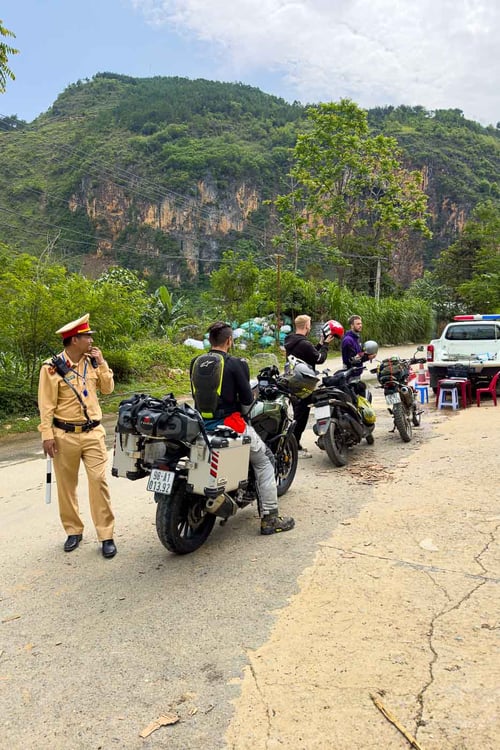
Police on the ground generally look the other way in my personal experience, but your travel insurance might not. Our complete guide covers licenses and police stops in detail.
Get Insurance That Covers Riding
Buy travel insurance that clearly covers motorcycle riding, check the engine size limits, and make sure it includes medical evacuation. Read the policy and ask your insurer in writing whether you're covered to ride on your license and IDP. Here's our travel insurance suggestion and guide.
Vietnam Visa and Entry Requirements
Do You Need a Visa?
It depends on your passport.
- Americans, Canadians, and Australians need a visa. Most riders get the e-visa.
- Citizens of the UK, Germany, France, Italy, Spain, Denmark, Sweden, Norway, Finland, Japan, and South Korea (plus a few others) can currently visit visa-free for up to 45 days.
Rules change, so double-check with your nearest Vietnamese embassy or the official e-visa site before you go.
How to Get the E-Visa
Apply online through the official site at evisa.gov.vn. The e-visa is open to every nationality and is good for up to 90 days. The government fee is US$25 for single entry or US$50 for multiple entry, and approval usually takes about three working days.
Stick to the official .gov.vn site. Plenty of look-alike sites charge extra for the same thing.
- Match your passport exactly. Your full name, date of birth, and passport number must match your passport's photo page character for character. A mismatch can get you stopped at check-in or immigration.
- Pick the right entry point. The application asks which airport or border crossing you'll use. Enter the one you're actually flying into.
- Choose multiple entry if you might pop over to Laos or Cambodia and come back.
- Apply a month early to give yourself a buffer.
- Print it and carry it with your passport.
Joining one of our tours? After you book, we'll send you the hotel address and host details to fill in on the form.
The Pre-Arrival Declaration
Vietnam now asks foreign visitors arriving at its major international airports, including Hanoi and Saigon, to fill out a free online pre-arrival declaration within three days before landing. It's not a visa. It's a short form with your passport, flight, and hotel details.
Screenshot or print the QR code it gives you so you can pull it up without data. Skip it, and you'll likely be filling it out on your phone in the immigration line.
Flights and Arrival
Booking Flights
Vietnam's main international airports are Hanoi's Noi Bai (HAN), Saigon's Tan Son Nhat (SGN), and Da Nang (DAD). From the US, most routes connect through a hub in Asia like Tokyo, Seoul, Taipei, Hong Kong, or Bangkok.
On a north-to-south ride, book an open-jaw ticket: into Hanoi, home from Saigon. Don't book a round trip from Hanoi by accident.
Before you book, check your airline's baggage limits. Riding gear adds weight fast.
Arriving in Vietnam
Right after customs you'll find ATMs, currency exchange counters, and SIM card stands. It's the easiest place to sort out cash and a phone plan before you head into the city.
For getting into town, use Grab (Southeast Asia's version of Uber) or the official taxi line, or arrange a hotel pickup ahead of time.
If you're crossing a lot of time zones, give yourself a day or two to shake off the jet lag before your first ride. Hanoi traffic is no place to ride on four hours of sleep.

Arriving for One of Our Tours
Before the trip, we'll add you to a WhatsApp group to collect your flight details. Airport transfers are included on all of our Vietnam tours, so once you clear customs, someone from our team will be waiting to take you to the hotel. If anything goes sideways at the airport, message the guide on WhatsApp.
Day 1 is an arrival day with a welcome dinner, so you don't ride until Day 2. Want to come in early or stay on after? We can book extra nights at the tour hotel for you.

Sorting Out a Bike on Your Own
If you're joining a guided trip, skip ahead. The bikes, fuel, and maintenance are covered. If you're riding on your own:
- Book ahead in peak season. Good touring bikes from reputable shops get booked up in spring and fall.
- Pick the right bike. A light 150 to 300cc dual sport handles most of Vietnam, on and off pavement.
- Ask about one-way rentals. Many shops in Hanoi, Da Nang, and Saigon let you drop the bike in another city for a relocation fee. Arrange it before you leave, not at the end.
- Know about the train option. You can send a motorbike as cargo on the north-south railway between Hanoi and Saigon, with stops at many cities in between. It's a handy way to skip a stretch or get a bike home, though the bike doesn't always travel on the same train you do.
- Check what's included. Ask about a luggage rack, a lock, spare tubes, helmets, and roadside assistance.
- Don't leave your passport as a deposit. Offer cash and a photocopy instead.
Money in Vietnam
- Currency: The Vietnamese dong (VND). The numbers get big fast, so it helps to drop three zeros in your head.
- Cash vs. cards: Cards work at bigger hotels and restaurants in cities. In the mountains and villages, it's cash.
- ATMs: Easy to find in cities and towns, but scarce in the remote north. Pull cash before you head into the mountains, and bring two cards from different banks.
- US dollars: Widely accepted, but at a bad rate. Use dong when you can.
- Watch your bills: Some notes look alike, like the 20,000 and 500,000 notes, which are both bluish. Check before you hand one over.
- Tell your bank you're traveling so they don't freeze your card on the first transaction.
Riding on your own, fuel, food, and guesthouses are cheap by US standards. Our complete guide breaks down what a trip costs on your own vs. on a tour.
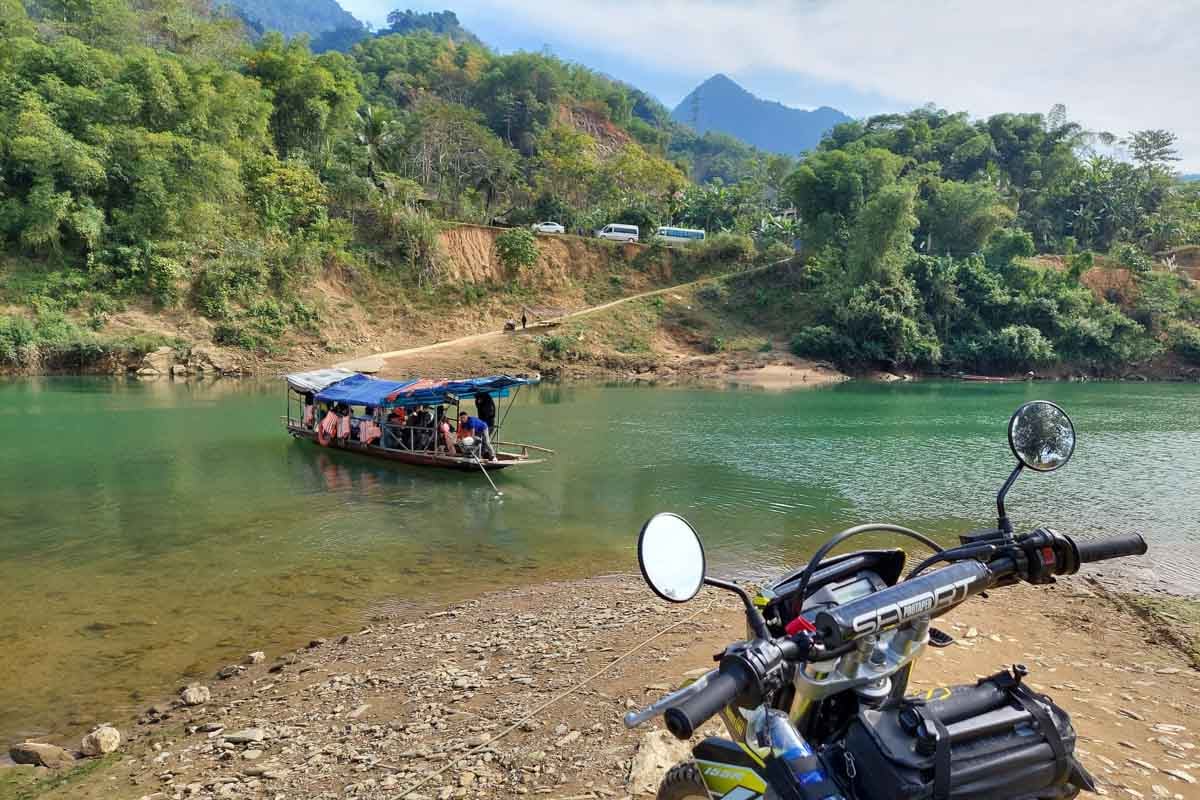
Money on Our Tours
Most meals, fuel, and hotels are covered on our trips, so about US$25 a day in spending money is plenty for snacks, drinks, and souvenirs.
Plan to tip your guide and support driver at the end of the trip. It's customary on guided tours in Vietnam, and they work hard for it. We suggest about US$7 to $10 a day for the support staff.
Phones, SIM Cards, and Navigation
- SIM card: Buy one at the airport after customs. It's cheap and quick, and you get a local number.
- eSIM: If your phone supports it, set up a Vietnam eSIM before you fly and you're connected the moment you land.
- Coverage: 4G is good across most of the country, including along all of our routes. Very remote valleys can still have dead spots.
- Wi-Fi: Most hotels have it. Homestays may be slower.
- Apps worth downloading: WhatsApp (most businesses and guides use it), Google Translate with Vietnamese downloaded for offline use, Google Maps with offline maps for every area you'll ride, and Grab for rides and food delivery in the cities.
- Power: Vietnam runs on 220V. Most outlets take two-pin round or flat plugs. Bring a universal adapter.
Riding on your own, you'll navigate by phone, so bring a phone mount and a way to charge on the go. On our tours, the guide leads the way, and offline maps are just for your free time.
Where You'll Stay
Riding on your own, you'll find hotels in every town and simple guesthouses (look for "nhà nghỉ" signs) almost everywhere else. In the mountains, family homestays are common and a highlight for a lot of riders. Outside of big holidays, you can usually book a day or two ahead or just show up.
- Hotels register your passport with local authorities. Expect the front desk to ask for it at check-in.
- Ask about bike parking. Most places will let you park inside or in a secure lot overnight.
- Book early around holidays like Tet and the April 30 long weekend, when hotels fill up fast.
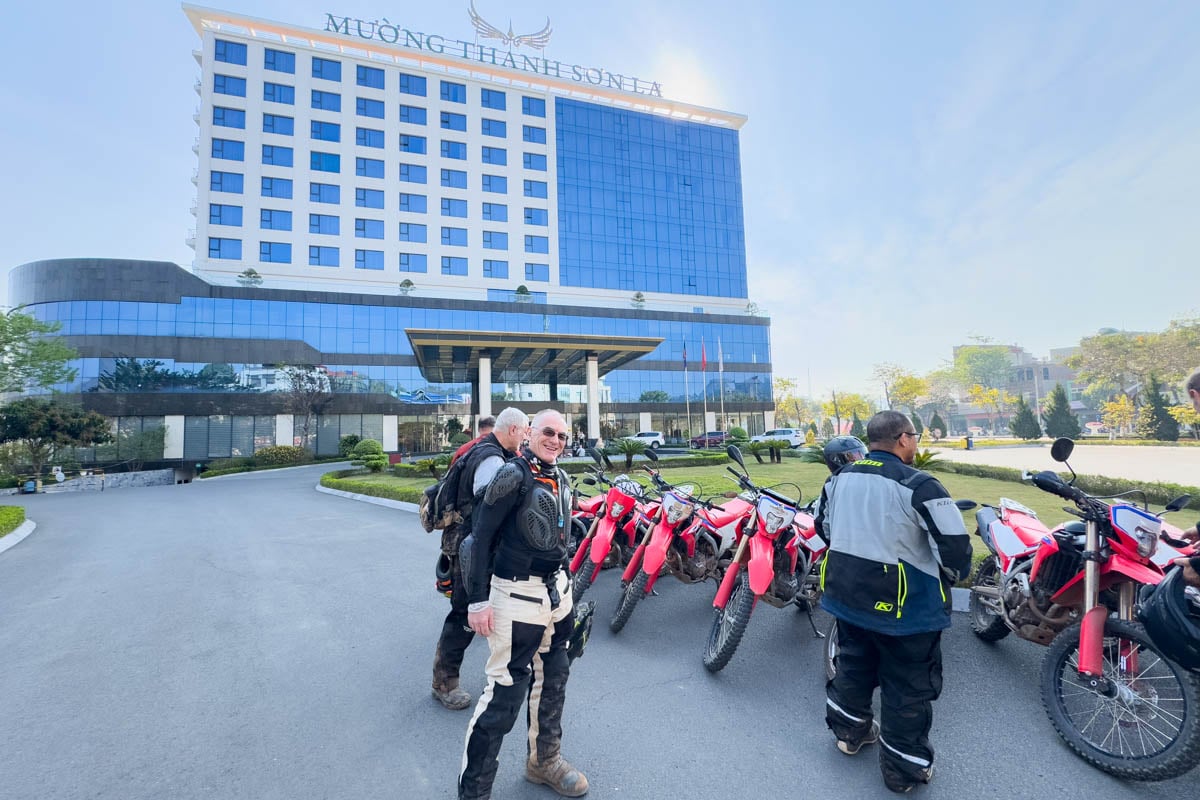
On our tours, expect a mix of comfortable hotels in towns and cities, a couple of nights in traditional wood-and-bamboo homestays in local villages, and, on the Northern route, a night on a boat in Ha Long Bay. A few house rules:
- Mini bar and room service are on you. Settle up at reception when you check out each morning.
- Report existing damage right away to reception or your guide, so you don't get blamed for it.
- Laundry: Most hotels offer it, so you can pack lighter than you think.
Food and Drinking Water
You're going to eat well. Vietnamese food is fresh, cheap, and everywhere, from roadside noodle stalls to family kitchens.
- Breakfast: Pho or another noodle soup, plus eggs, bread, and fruit at most hotels.
- Lunch: Rice, noodles, grilled meats, and whatever the local spot does best. On the road, the busiest roadside restaurant is usually the best bet.
- Coffee: Vietnamese coffee is strong and sweet. Try egg coffee in Hanoi at least once.
- Water: Don't drink the tap water. Stick to bottled or filtered water.
- Upset stomach: Pack over-the-counter meds just in case. New food plus heat can catch anyone.
On our trips, breakfast, lunch, and dinner are included most days, except for a few free meals on rest days and departure day.
Water, coffee, and tea are included during the ride and at every meal, on every route. Some lunches are picnics on a mountain or home-cooked meals with a local family.

Local Etiquette and Language
Vietnamese people are friendly and welcoming. A little respect goes a long way.
- Keep your cool. Raising your voice or making a scene is a big loss of face. Stay calm, even when things go sideways.
- Take your shoes off when entering homes, homestays, and temples.
- Cover up at temples. Shoulders and knees covered.
- Ask before photographing people, especially in minority villages up north.
- Agree on prices first for motorbike taxis and anything from street sellers. Haggling is normal.
Learn a few words. People light up when you try.
- Hello: Xin chào (sin chow)
- Thank you: Cảm ơn (gahm uhn)
- No, thank you: Không, cảm ơn (kohm, gahm uhn)
- Goodbye: Tạm biệt (tahm bee-et)
Health and Medications
- See a travel doctor about recommended vaccines a few weeks before you fly.
- Bring prescription meds in their original packaging, with a doctor's note or copy of the prescription.
- Pack bug spray, sunscreen, and hand sanitizer.
- Leave the vape at home. Vietnam has banned e-cigarettes, and the ban covers tourists.
What to Pack
You can buy riding gear when you arrive, but I always recommend for people to bring their own full protective gear, including a helmet, from home. High-quality, safety-rated gear can be difficult to find in Vietnam, and finding the right fit in Western sizes can be another challenge.
Beyond protection, you'll also want to dress for Vietnam's changing conditions. Pack for heat and humidity, with layers for chilly mornings up north and a packable rain suit. Our essential ADV gear guide covers the minimum, and the RIDE Shop carries the hot-weather gear we wear in Vietnam.
Your Vietnam Motorcycle Trip Planning Timeline
- 6 months or more out: Pick your route and dates. Book your tour or your rental bike, especially for spring and fall.
- 3 months out: Book flights (open-jaw if you're riding north to south). Get your IDP. Buy travel insurance that covers riding.
- 1 to 2 months out: See a travel doctor. Sort out your riding gear and break in anything new.
- 3 to 4 weeks out: Apply for your e-visa on the official site.
- 1 week out: Set up an eSIM, download offline maps and Google Translate, and tell your bank you're traveling.
- Within 3 days of landing: Fill out the pre-arrival declaration and save the QR code.
What a Guided Trip Takes Off Your List
One of the best parts of a guided trip is how much of this list disappears.
On our tours, we handle:
- Route planning and navigation
- Motorcycles, fuel, and daily maintenance
- Hotels, homestays, and most meals
- Airport pickup and drop-off
- Support truck for your luggage
- Entrance fees and boat trips
- Translation and dealing with anything that comes up on the road
You handle:
- Flights (into Hanoi, and out of Saigon on the North to South routes)
- Visa and pre-arrival declaration
- Motorcycle license and IDP
- Travel insurance that covers riding
- Riding gear
- Spending money and tips
Common Mistakes First-Timers Make
- A typo on the visa. One wrong letter can stop you at the airport.
- Using a look-alike visa site. Same visa, double the price.
- Skipping the pre-arrival form. Not the end of the world, but it costs you time in line.
- Booking a round trip from Hanoi on a north-to-south ride. You finish in Saigon.
- Renting a bike you can't drop off where you finish. Sort out the one-way rental before you leave.
- Landing the same day your trip starts with no buffer. One delayed connection and you're scrambling.
- Not checking that your insurance covers motorcycle riding. Do it before you need it.
- Heading into the mountains without cash. ATMs get scarce fast.
- Planning too many miles a day. Vietnam's roads are slow. Plan shorter days than you would at home, and finish before dark.
- Overpacking. Laundry is easy and cheap.

Vietnam Trip Planning FAQ
Do Americans need a visa for Vietnam?
Yes. Most Americans get the e-visa online at evisa.gov.vn. It's valid for up to 90 days, and the government fee is US$25 for single entry.
How far in advance should I plan a motorcycle trip to Vietnam?
Six months or more is ideal. Spots on group trips and good rental bikes can book up early, and you'll want time for the IDP, visa, and flights. Booking early can also save you money.
How many days do you need to ride Vietnam?
About 10 to 14 days for the northern mountains, 3 to 5 days for the Ha Giang Loop alone, and 2 to 4 weeks to ride from Hanoi to Saigon on your own.

Can I do a one-way motorbike rental in Vietnam?
Yes. Many rental shops in Hanoi, Da Nang, and Saigon offer one-way drop-offs for a relocation fee. Arrange it when you book.
Can I use US dollars in Vietnam?
Often, yes, but you'll get a poor rate. Use Vietnamese dong for everyday spending.
Will my phone work in Vietnam?
Yes, with a local SIM or an eSIM. 4G coverage is good across most of the country.
Is the tap water safe to drink?
No. Stick to bottled or filtered water.
Should I tip in Vietnam?
Tipping isn't expected everywhere, but it's customary to tip your guide and driver at the end of a guided trip.
Ready to Ride Vietnam?
Three fully guided routes. 14 days each. Pick the one that fits your riding.