
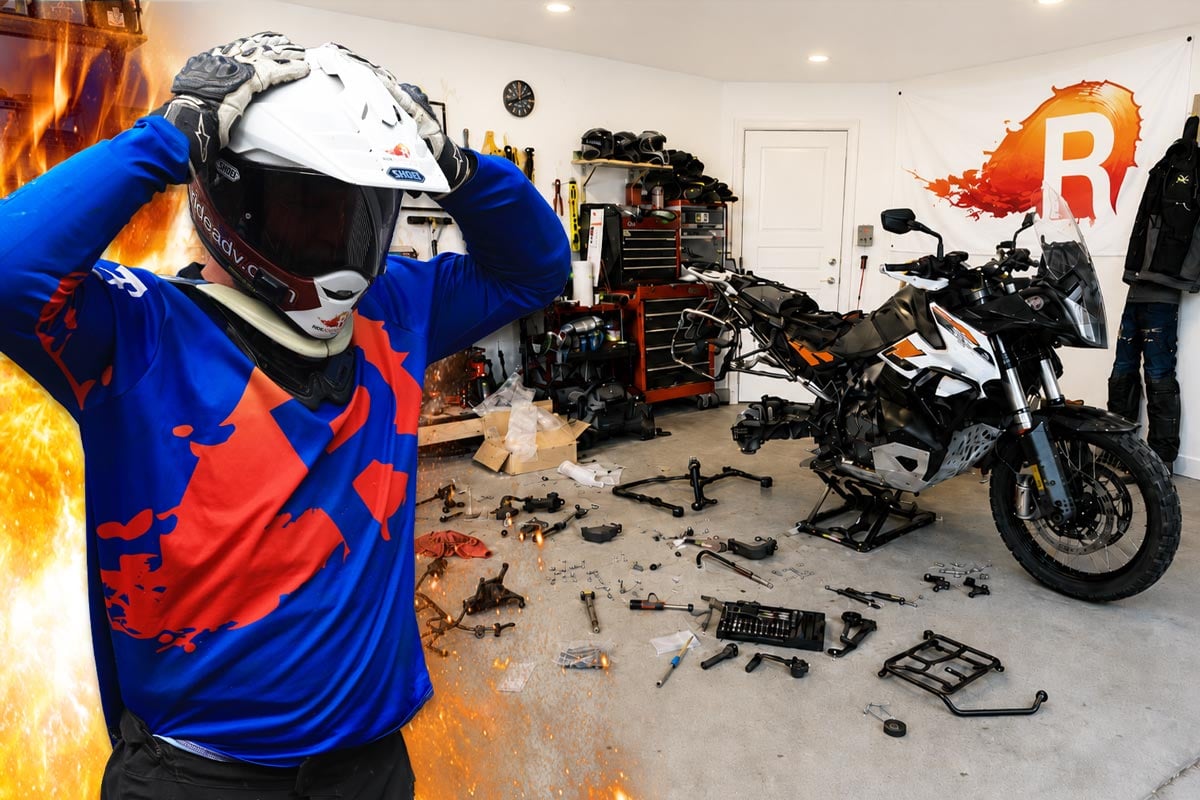
Our pre-ride checklist to ensure your motorcycle will go the distance.
There's no shortage of variables that can bring a BDR to an early conclusion. Gnarly weather, illness, and accidents are all common culprits, and truth be told, there's not much any of us can do about any of those things.
“Want our short version checklist for your next RIDE? Download our Motorcycle Trip Checklist!”
But just imagine, after spending weeks planning and organizing your next BDR (not to mention spending a chunk of change to make it happen), your trip gets cut short because you failed to properly prepare your bike.
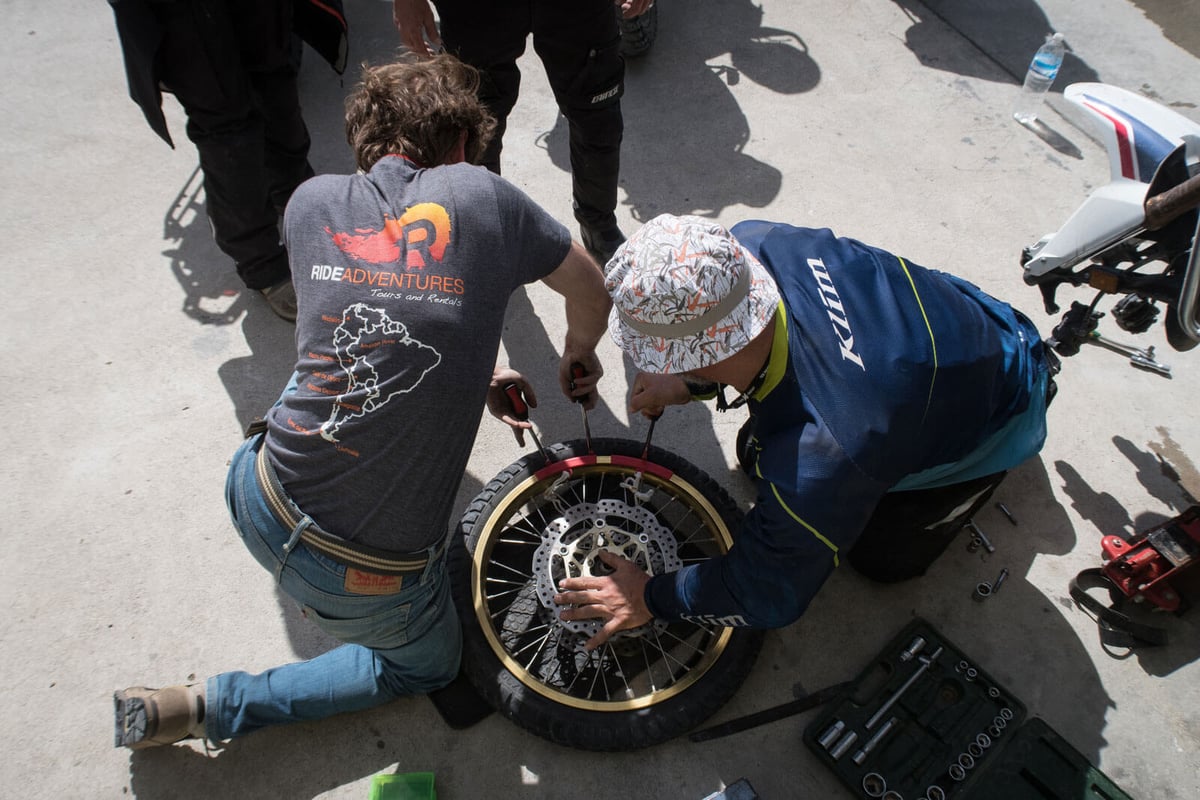 "The more you do now, the less you'll be doing in a parking lot later."
Setting your motorcycle up for success for any long trip isn't particularly complicated, but there's a short list of to-dos you need to get done before you set out.
Here's our approach to preparing our fleet bikes before they go out on tour.

Maintenance and Prevention
We'll start with the bedrock basics: Routine maintenance and reliability go hand-in-hand, so if you want to prepare your motorcycle for a long trip, your checklist starts there.
Get Up to Date on Your Service Intervals
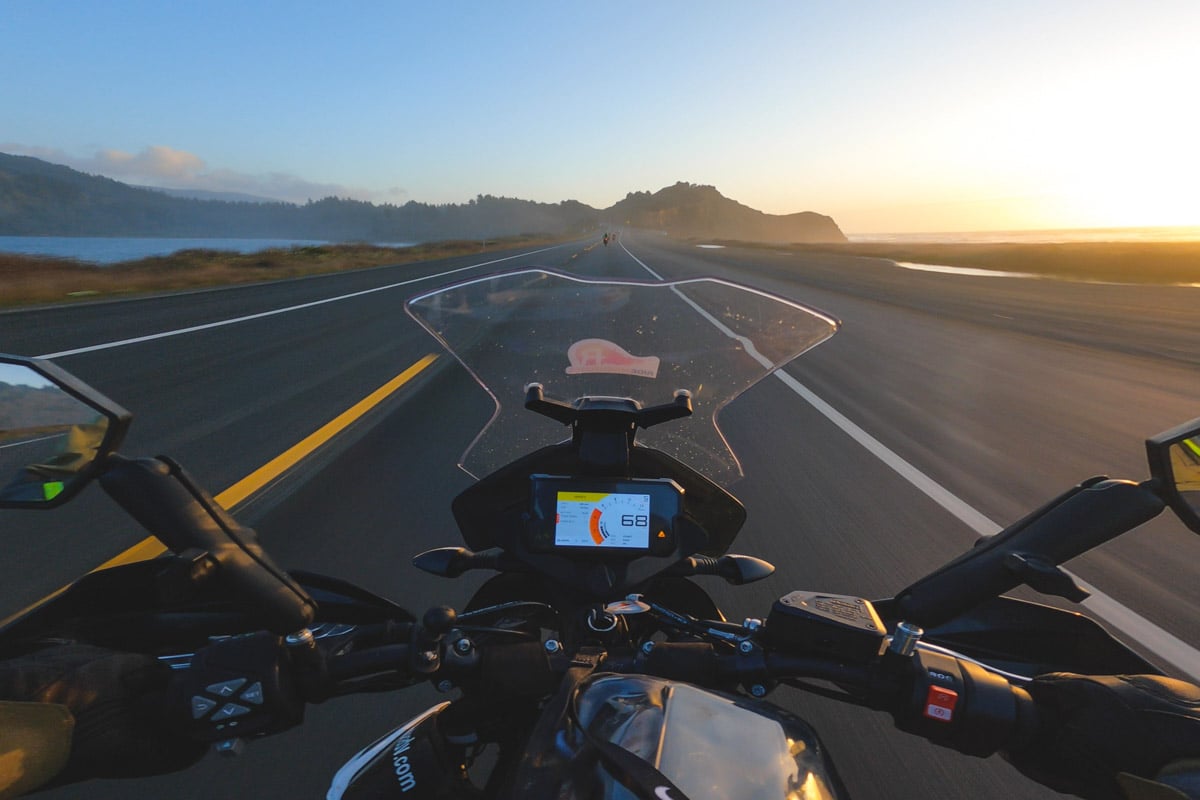 "Fresh fluids and filters give you one less thing to worry about on the road."
Your owner's manual is the bible for keeping your motorcycle running reliably.
If you're due for an oil change, coolant flush, air filter, or valve service (or will pass the recommended mileage during your trip), go ahead and do it before you leave.
Handle Those Consumables Now
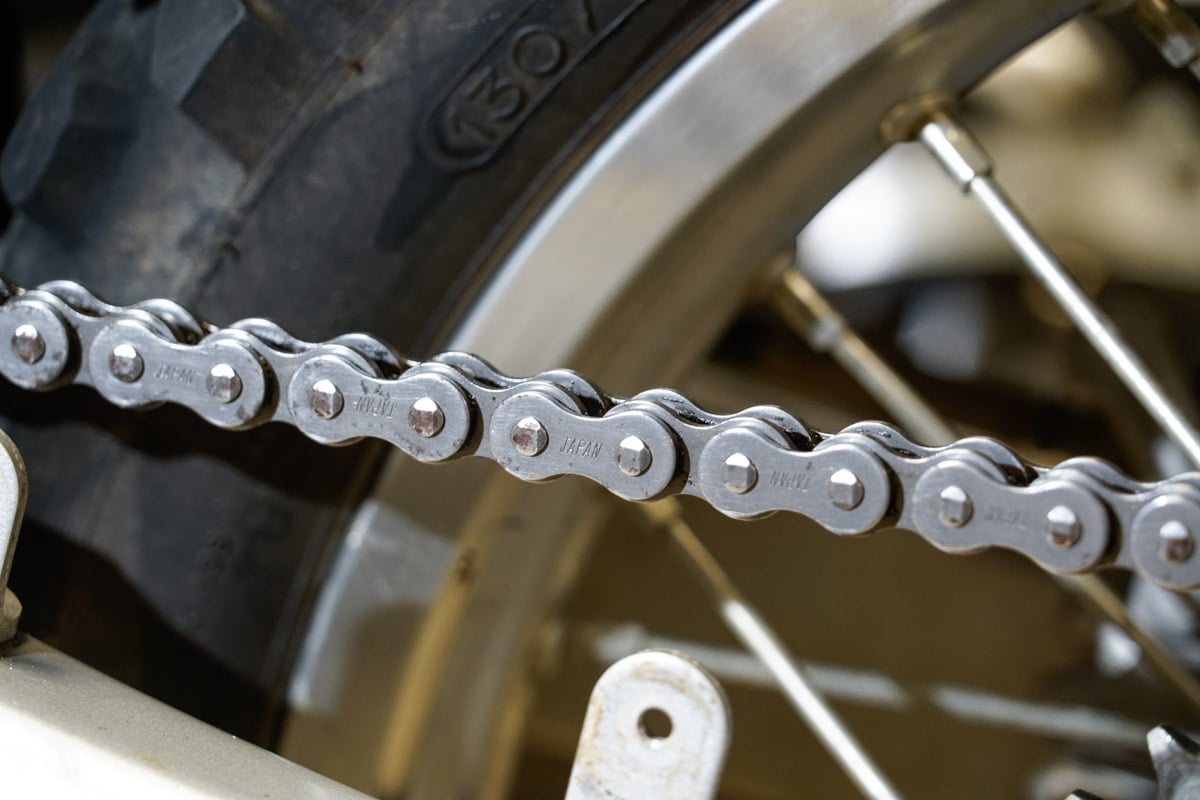 "Chain getting long in the tooth? Better to replace it now than on the side of the road."
Consumables are anything on your motorcycle that's expected to wear out at regular intervals.
For most riders, that means spooning on a fresh set of tires and checking those brake pads, but those aren't the only consumables you should be checking.
For example, if your chain and sprockets are near the end of their lifespan, it's a good idea to swap them out before you go. The same goes for clutch plates, especially if you're planning on riding off-road, which can be harder on clutch components.
Sort Out Any Known Weak Points
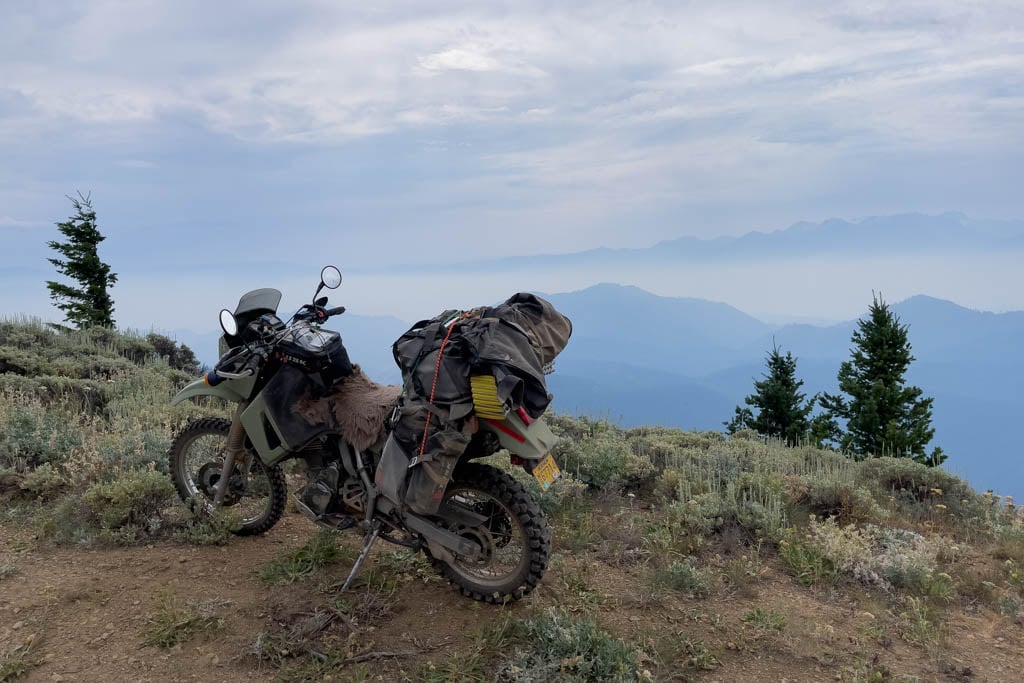 "Yes, even the unkillable KLR has well-documented weak points."
While most bikes are generally reliable these days, even the most tried-and-true models have known issues.
The unkillable KLR650, for example, has a bad chain balancer (aka doohickey), while the DR650 has a similar reputation for its neutral sending unit.
Do a little research on any known issues for your make and model of motorcycle. Many potentially catastrophic failures have simple, inexpensive, and well-documented fixes you can handle in the garage without any special tools or knowledge.

Don't Skimp on Protection
We've always found that while protection parts can be expensive, they earn their keep the first time you drop your bike.
Not being stranded in the woods with a gaping hole in your engine case is also worth a few hundred bucks up front in our experience.
A Quality Skid Plate
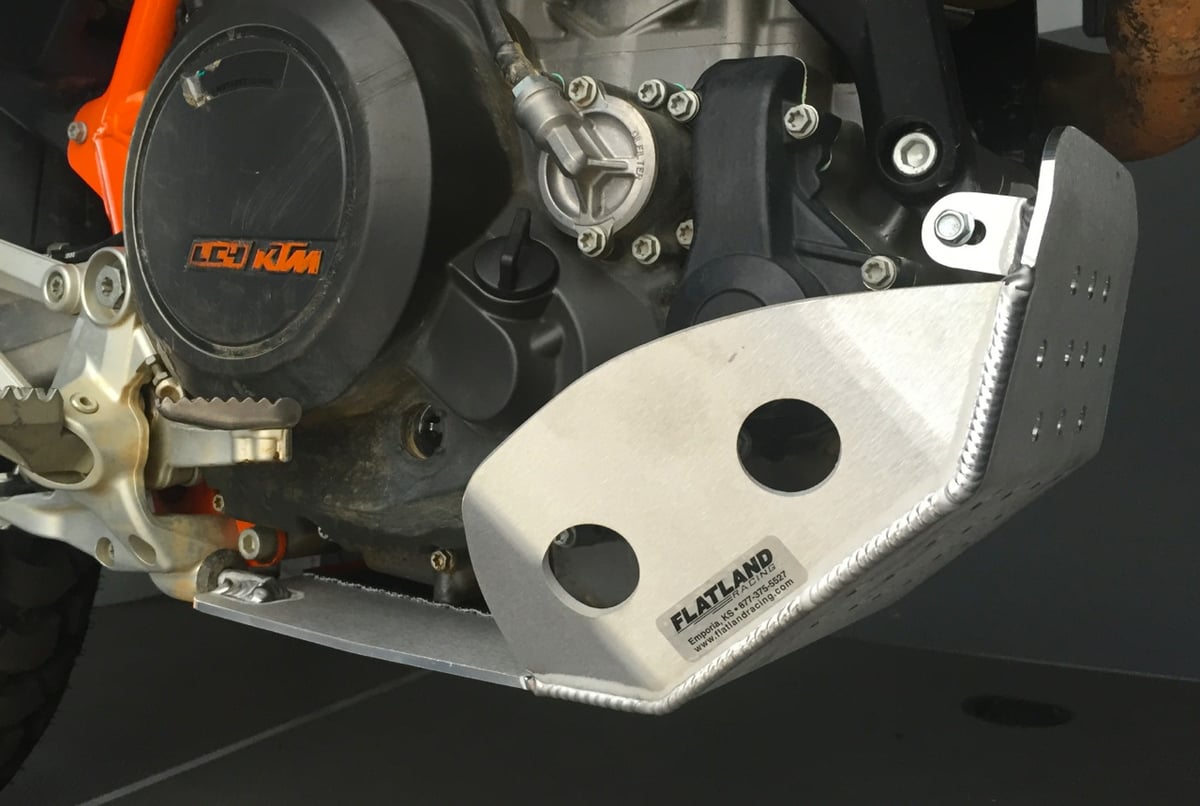 "If you're leaving pavement, a good skidplate should be a top priority."
While some adventure touring bikes come with a factory skidplate nowadays, it's rare to see one that's tough enough to take a rock or log at speed.
Your skid plate protects your engine, frame rails, and exhaust from impacts, so a good one is worth investing in.
We generally go for aluminum skid plates in the 3/16 inch to 4mm range because they're built to take a beating without adding much weight to your bike.
Those with additional wings/extensions to protect things like water pumps or linkage are best.
Hand Guards/Bark Busters
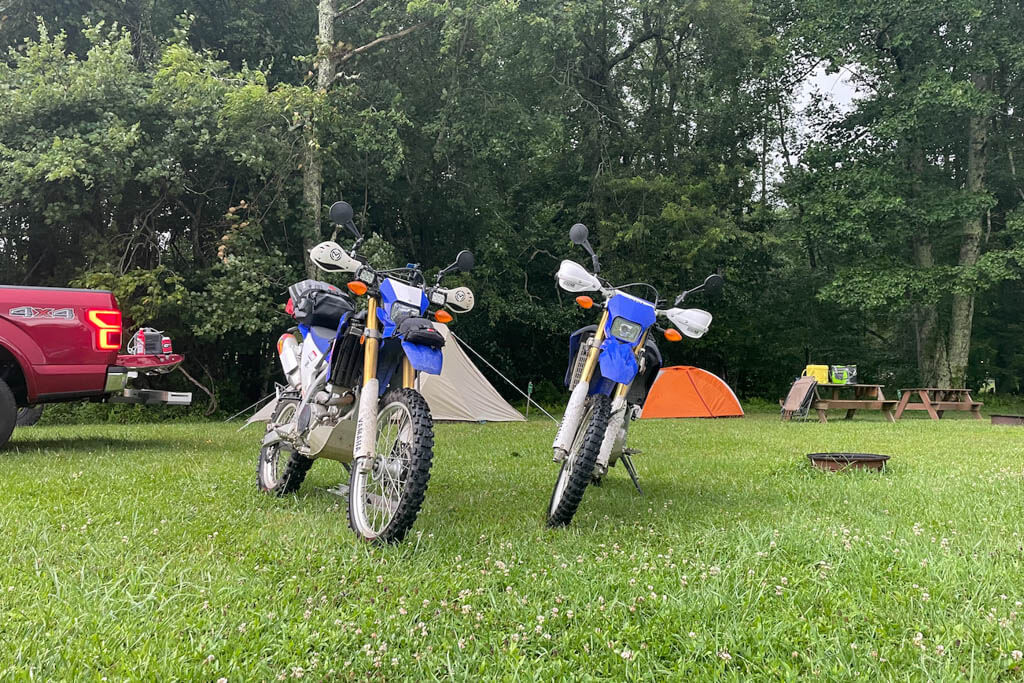 "Full-frame handguards like these keep your levers in one piece should you hit the ground."
One of the most common casualties of a low-speed tip-over is a broken brake or clutch lever.
A good set of hand guards makes this a non-issue, and can also protect your hands from stinging branches or cold air in the cooler months.

Look for guards with metal frames that mount to both the bars themselves and the bar ends for maximum effectiveness. Flag-style guards or cheap plastic wrap-arounds are common factory accessories, but they rarely hold up in a crash.
Handlebars
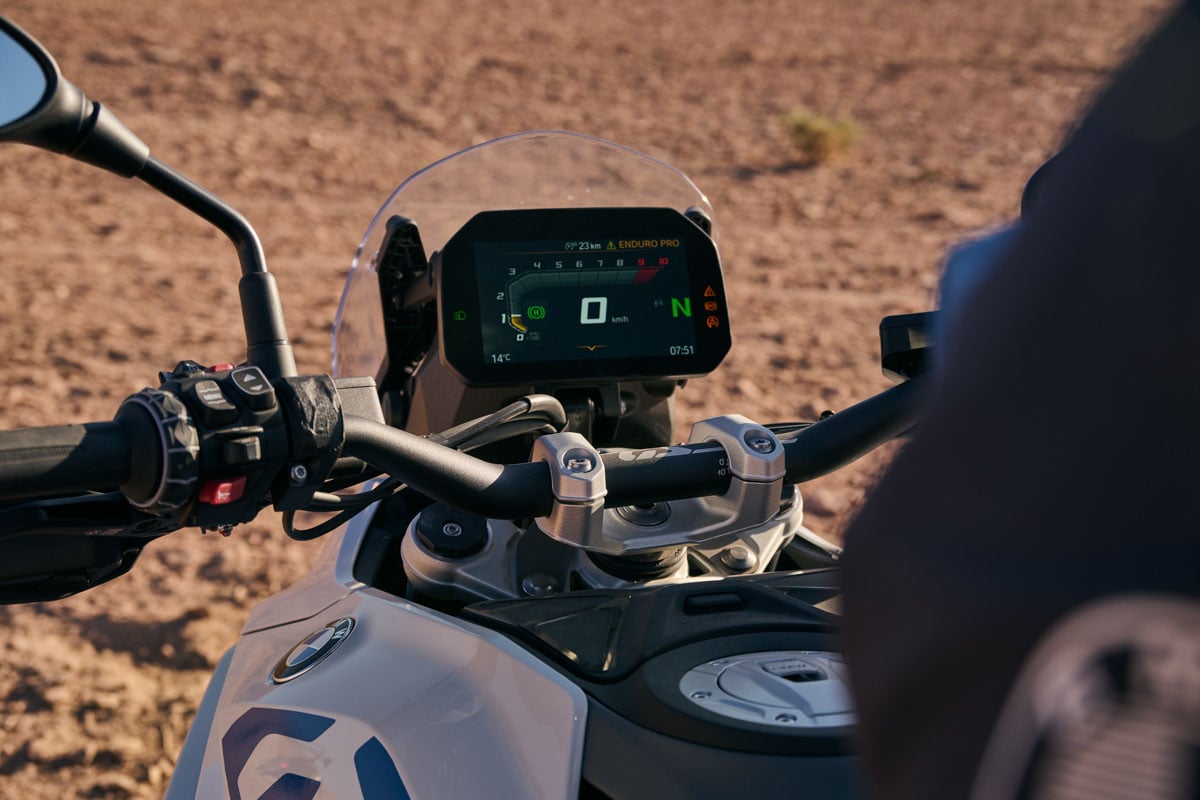 "BMW's latest GS comes with a proper aluminum 'fat bar' as factory equipment." photo: BMW
While we're on the topic of bars, it's also a good idea to make sure you've got bars that are built to survive a crash.
Thin-walled steel bars are a common cost-cutting measure for OEMs and are prone to bending or kinking from anything but the mildest tip-over.
Consider upgrading to an aluminum bar, whether that's a standard 7/8-inch bar or a motocross-style "fat bar" with a larger diameter in the center.
Both options are cheap upgrades that can save your bacon on a long motorcycle trip.
Engine Guards
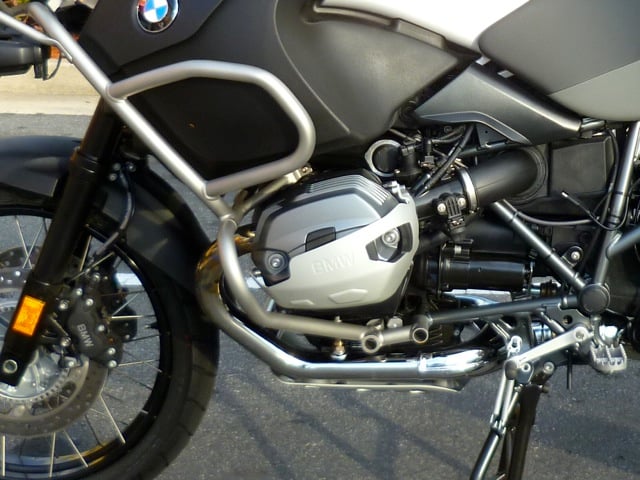 "This GS has both crash bars and case covers to protect its protruding cylinders."
If you've got an engine that sticks out far enough to hit the ground in a crash, some form of protection is a smart idea.
Some folks opt for full crash bars while others keep it light with engine case covers, but some form of protection is a smart investment.

With that being said, we've found full-coverage crash bars to be the most useful option here. Crash bars double as a way to keep your plastics and/or fuel tank off the ground should the bike go down or need to be set on its side for unplanned maintenance.
Radiators and Oil Coolers
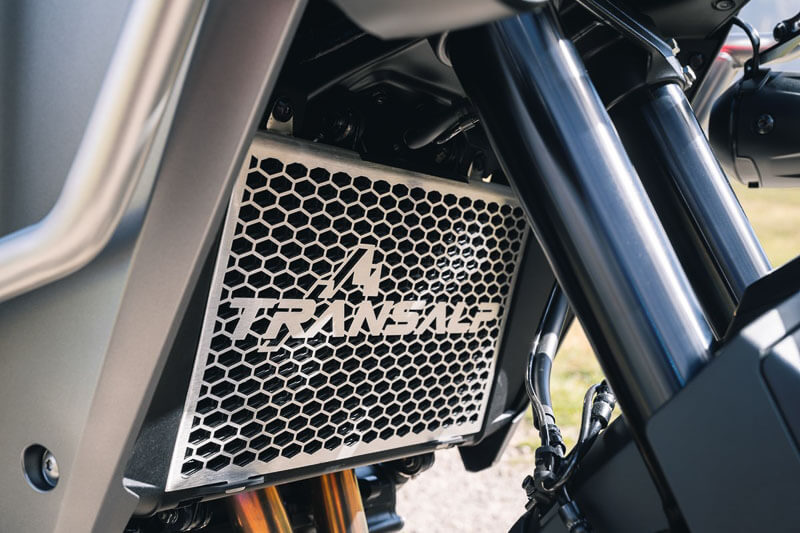 "If you're even considering gravel, protecting those fragile cooling fins is a must."
Flying rocks have a nasty habit of finding their way into exposed radiators.
If your bike has forward-mounted radiators or oil coolers and you're planning on spending any time off-road in gravel or rocks, a protective grill is well worth the investment.
Headlight Guards
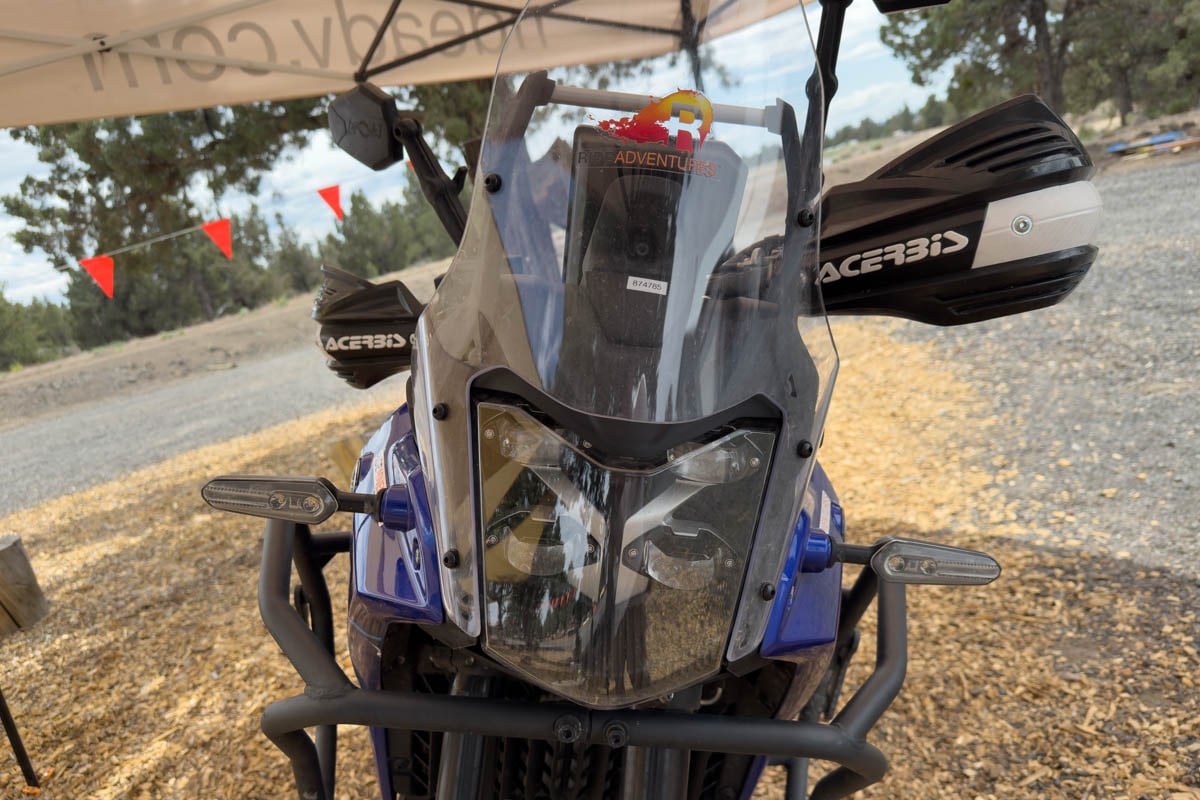 "Flying debris and glass don't mix. Save yourself the inconvenience and expense of replacing a headlight."
While a broken headlight won't necessarily stop your motorcycle trip dead in its tracks, it's a major inconvenience that will limit your riding to daytime and clear weather.
If you're not into the look of a headlight grill, consider a clear polymer alternative instead.
Exhaust Protection
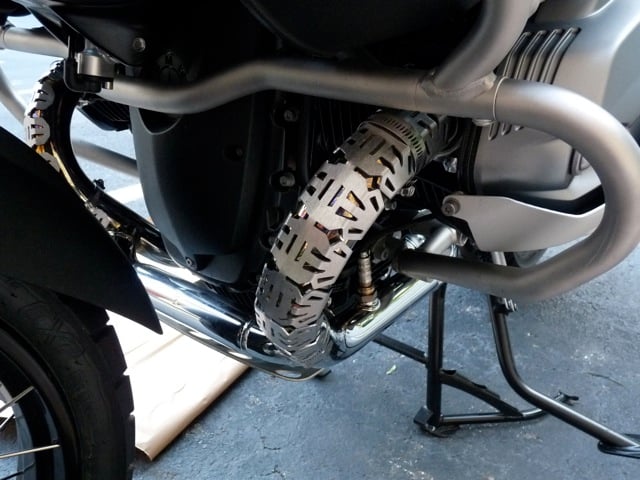 "Consider protecting any parts of your exhaust that could hit the ground in a crash."
A dented pipe or rashed silencer won't end your ride, but if your exhaust is exposed in a way that could be catastrophic in a crash, you should consider protecting it as well.
Luggage racks are often a one-size-fits-all solution if you don't mind the added weight.

Navigation
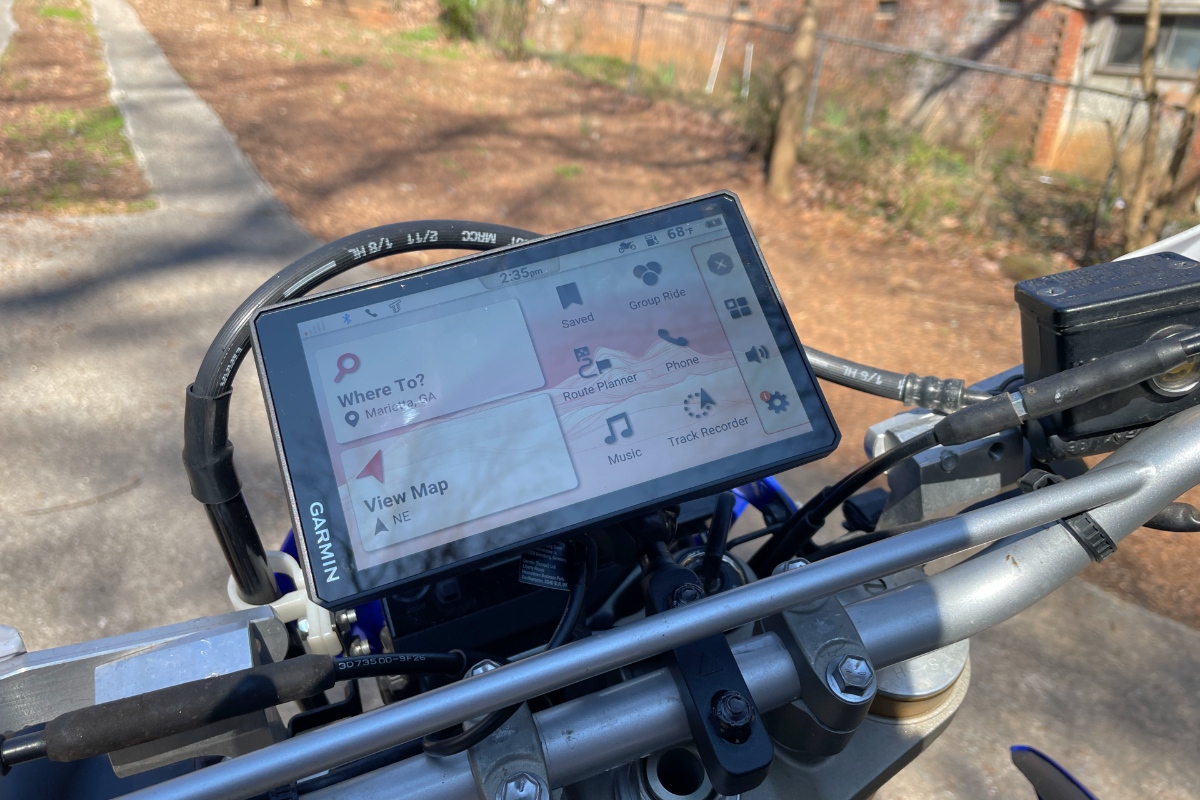 "We've been testing Garmin's latest Zumo XT3, and it's a standout winner if you're looking for a dedicated GPS."
If you're taking a long trip on your motorcycle, we recommend a two-pronged approach to navigation. One reliable electronic GPS, and one set of paper maps that covers the areas you'll be riding.
Garmin's latest-and-greatest Zumo XT3 is the best in the business for navigating unknown areas and recording trips.
A phone connected to power with a good GPS app like Gaia navigation works too, but the power connections often fail in the wet.
Odds & Ends
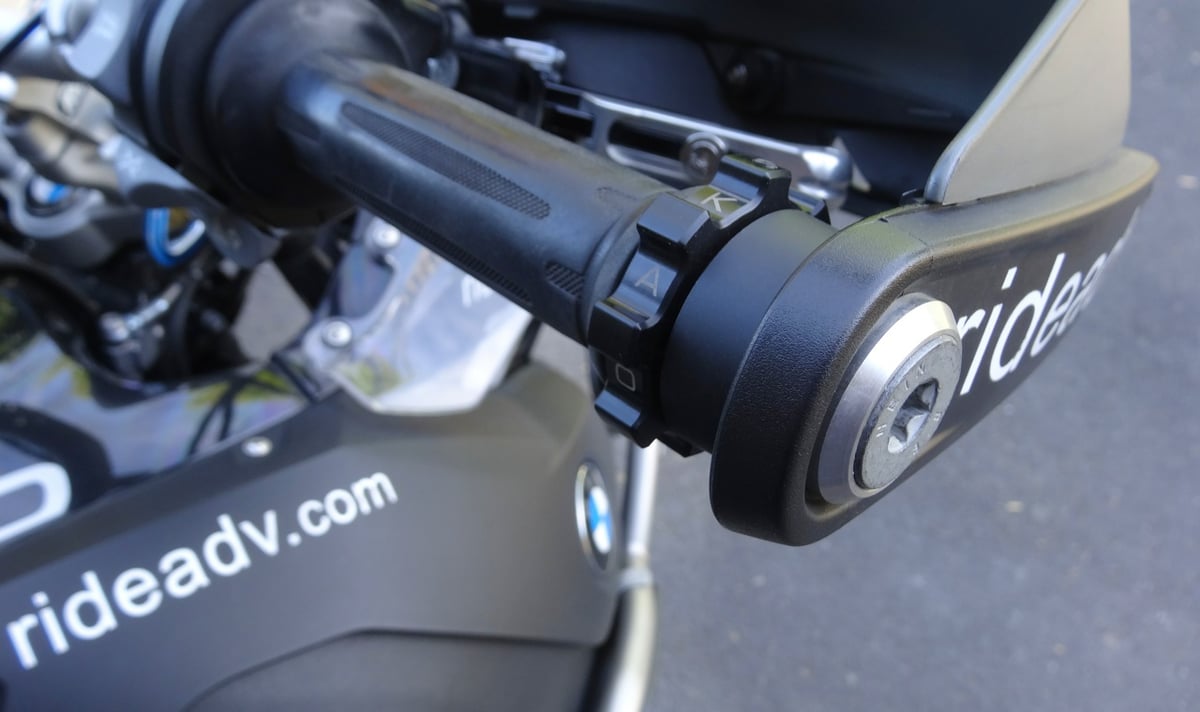 "Nobody needs cruise control, but it sure is nice to have on the highway."
If you've got all the above taken care of, chances are you're good to tackle any long motorcycle trip under the sun. That being said, here are a few quick situational recommendations.
-
Kickstand Footprint: If you know you're going to be riding in sandy or wet/muddy conditions, adding a larger footprint to your kickstand keeps it from sinking down and eventually falling over.
- SOS Device: If you're planning on riding in remote areas (especially if you're going alone) a GPS-powered SOS device like a Garmin inReach or Spot X could save your life.
- Cruise Control: Toughing it out is great until it isn't. If your trip includes long hours on the freeway and your bike doesn't have cruise control, consider adding an aftermarket throttle holder.
Feel free to comment with any interesting gear, tools, or random items you’ve packed that ended up being a total game-changer on a long motorcycle trip. Always curious to hear what other riders swear by.
RIDE on! 🤘